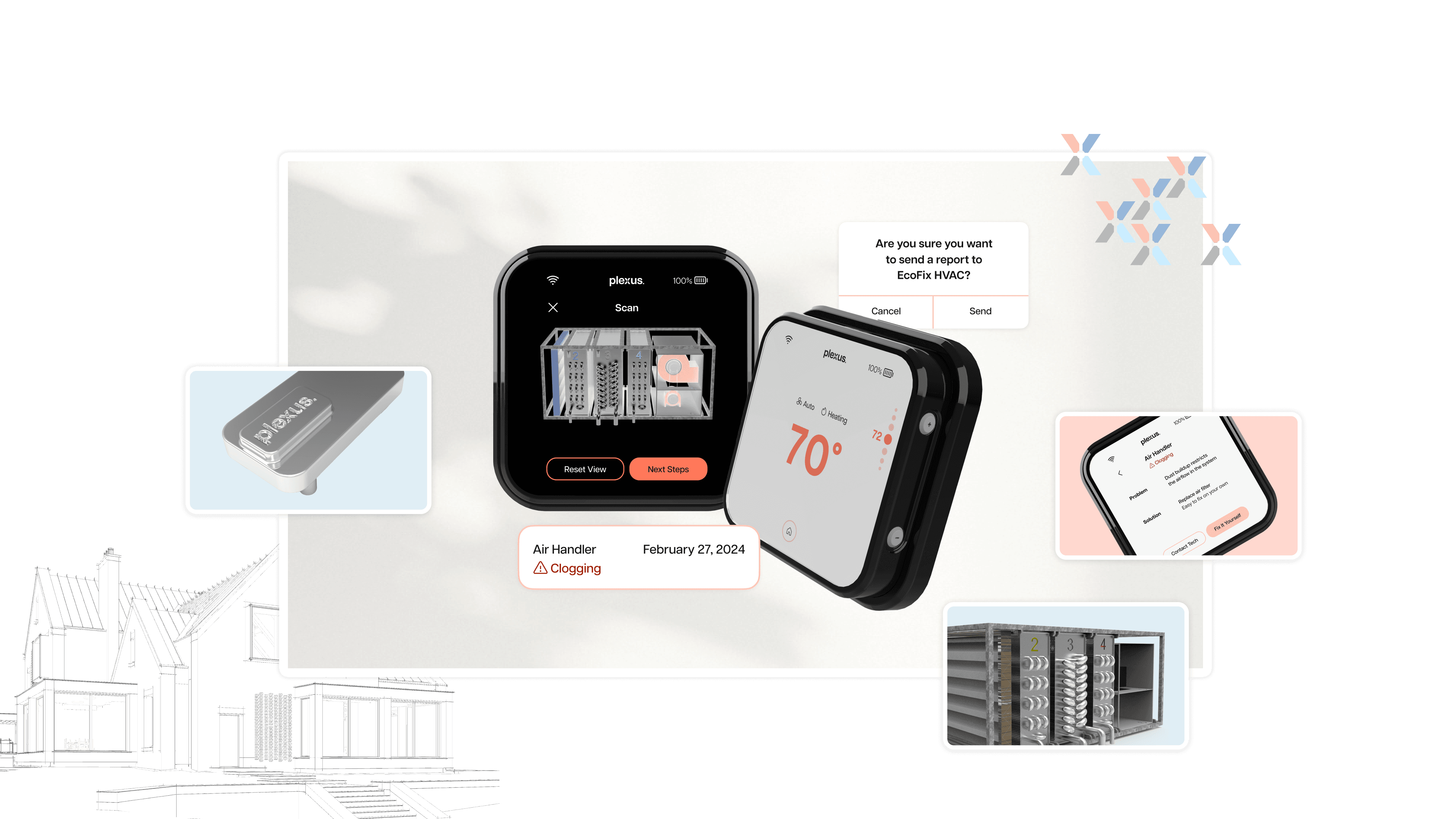
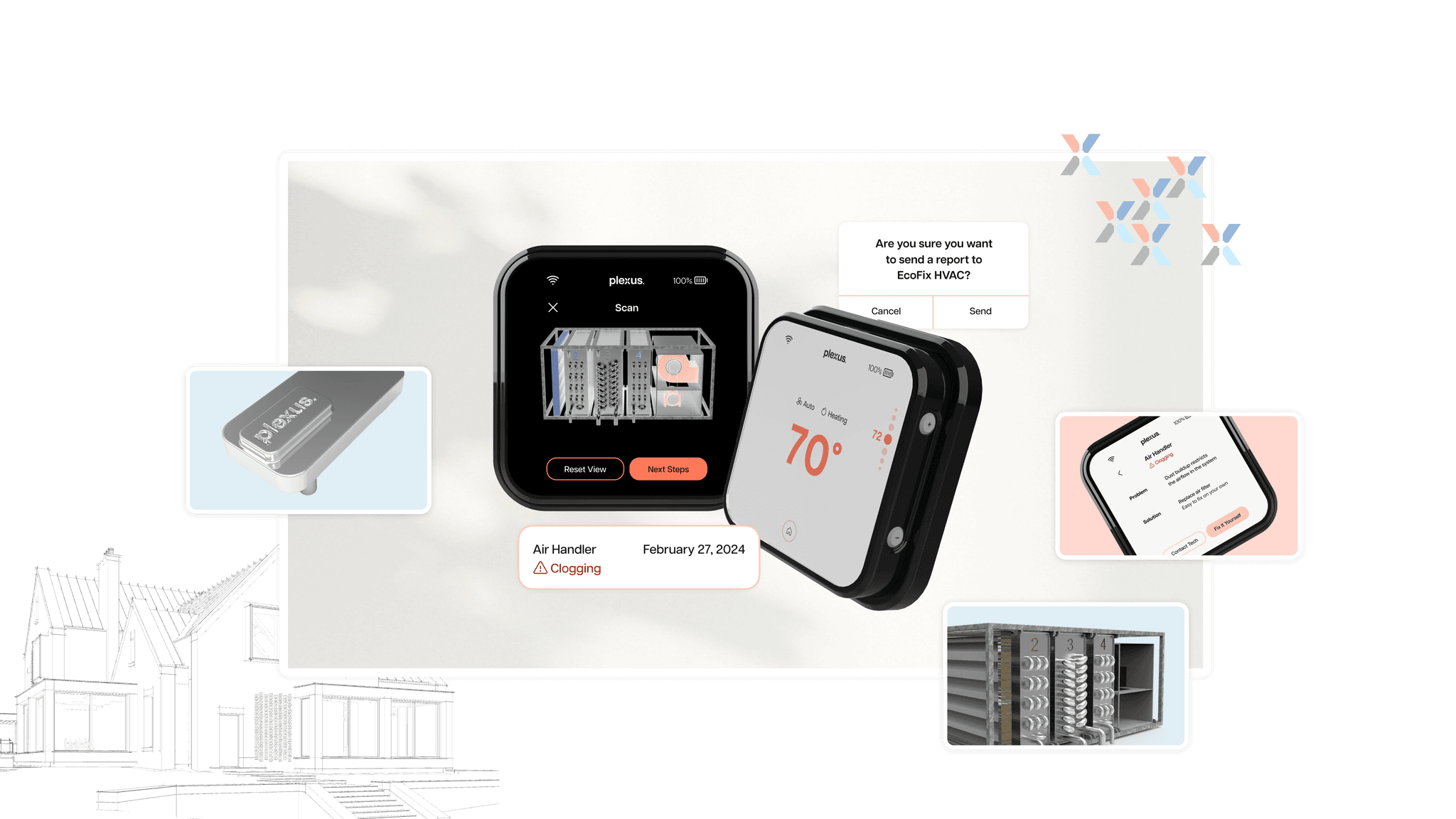

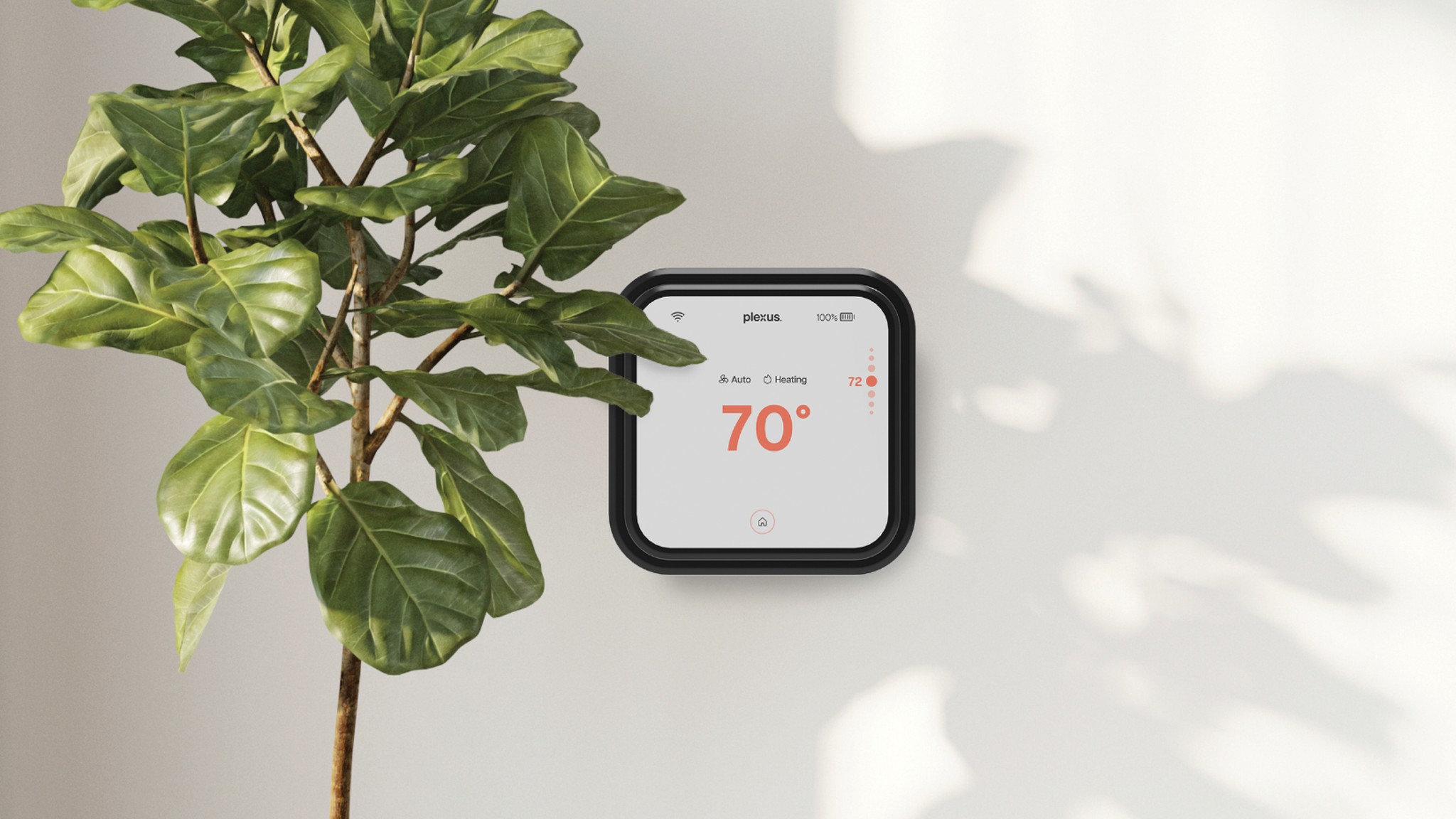
The Plexus system, complete with a smart thermostat and new state-of-the-art HVAC system, ensures peace of mind when it comes to temperature control and HVAC maintenance.



The Problem
Middle-aged homeowners are in need of a new system that is more efficient, intuitive, and understandable
Home visits for technicians to repair these issues are standard in the industry, but oftentimes the problem is not diagnosed yet and technicians arrive without needed materials.
The lack of HVAC diagnostics from the homeowner results in service call-backs, financial loss for both parties, and customer dissatisfaction.
The Solution
Revolutionizing how homeowners understand and interact with their HVAC unit and home
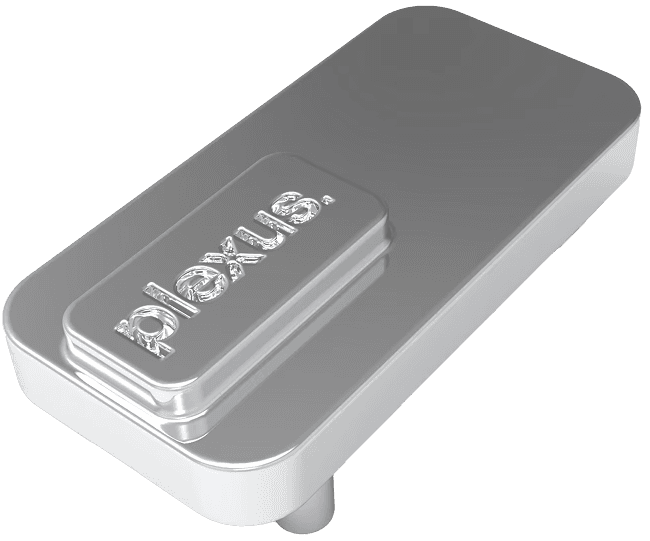
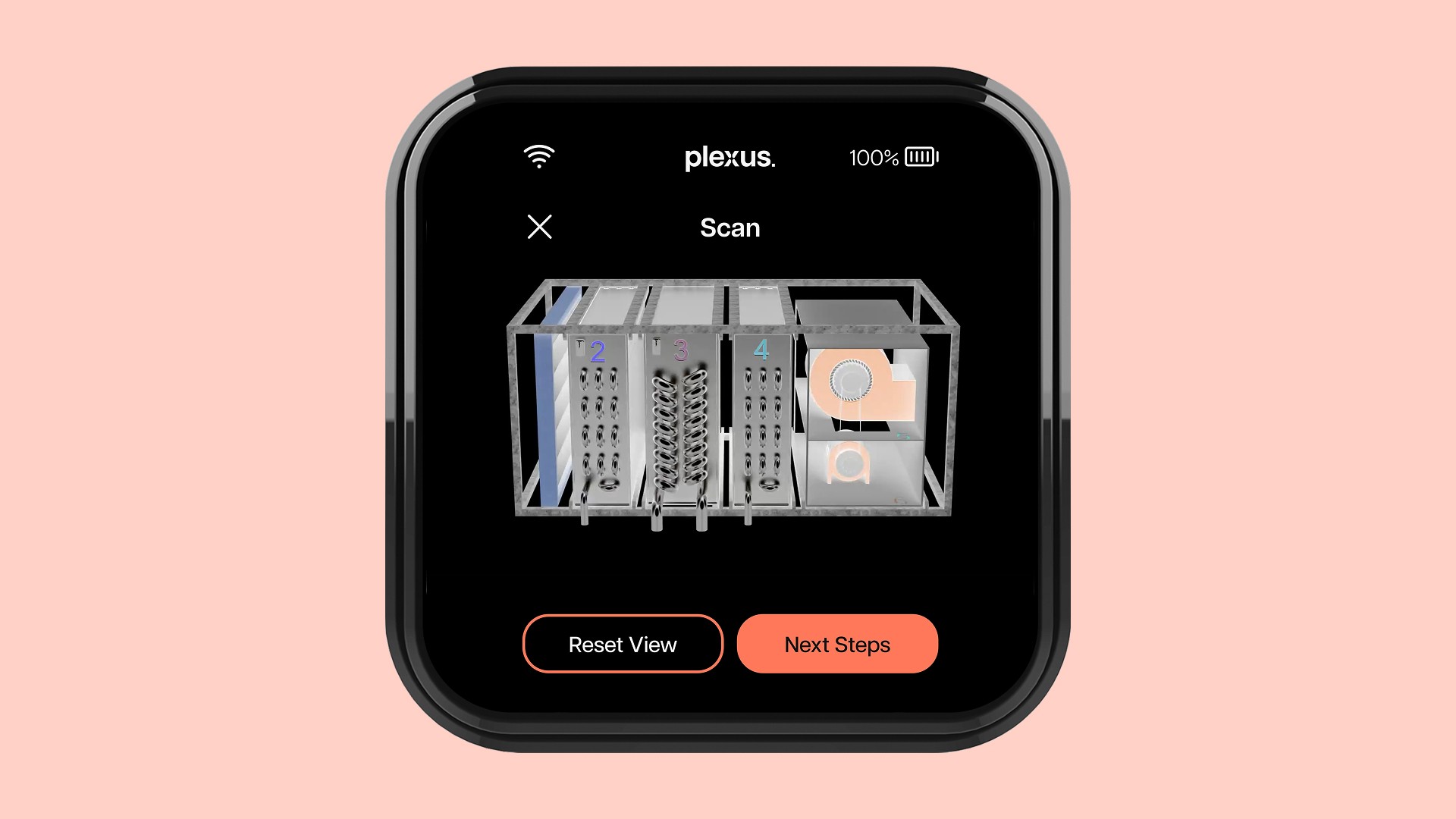
Built directly into your HVAC system to monitor the system’s health.
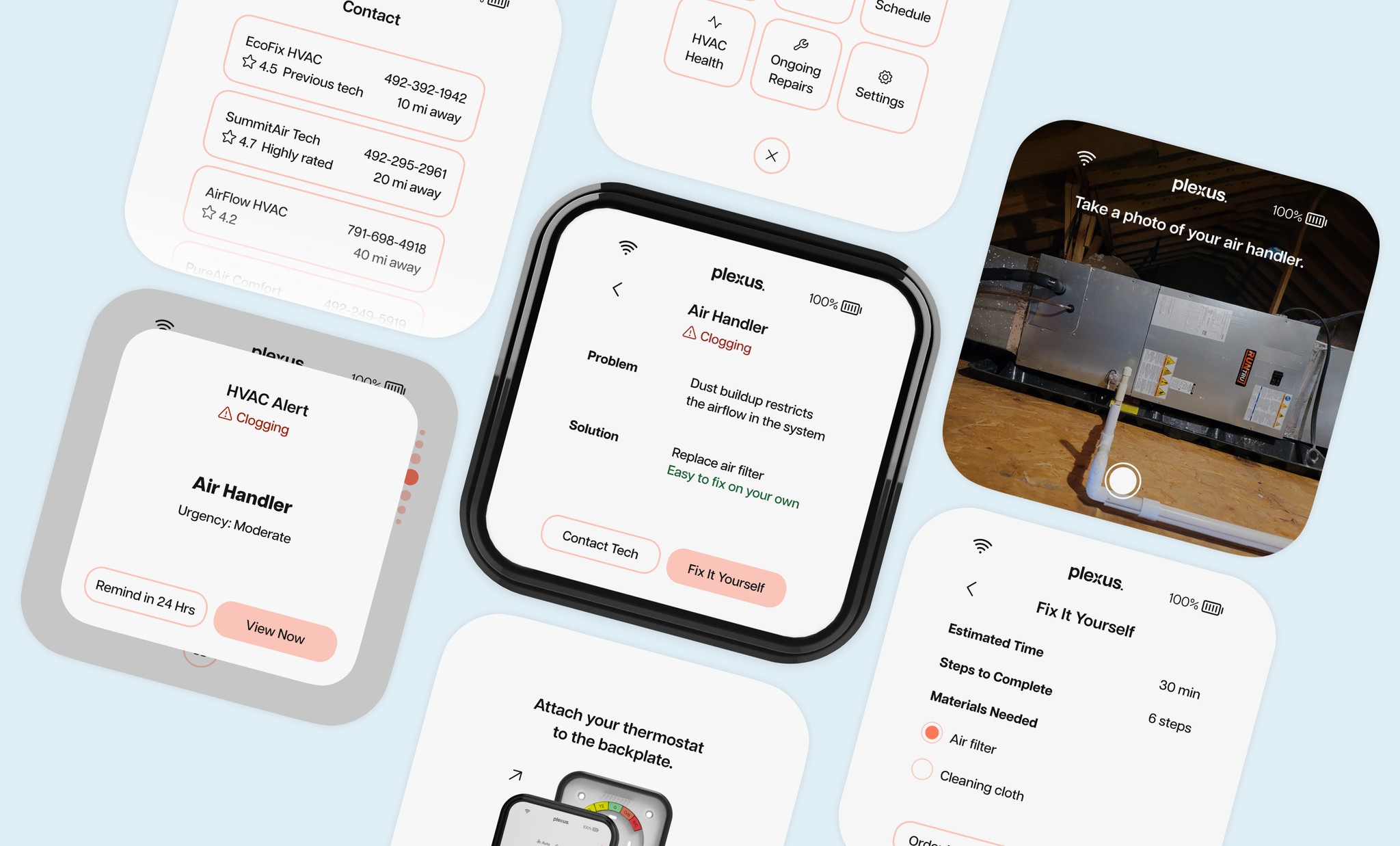
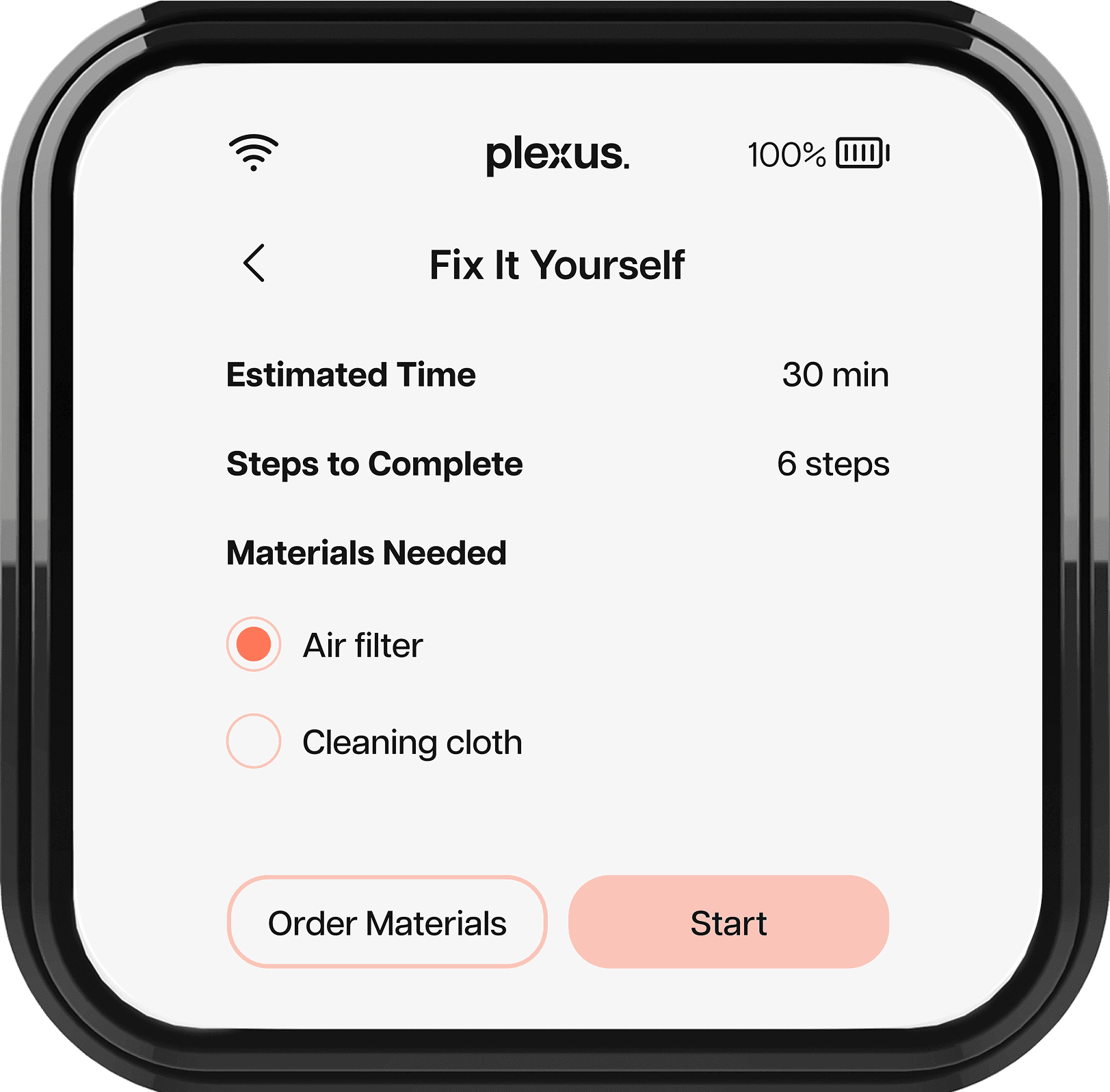
Get alerts about your HVAC health, step-by-step fixes, and schedule a technician visit.
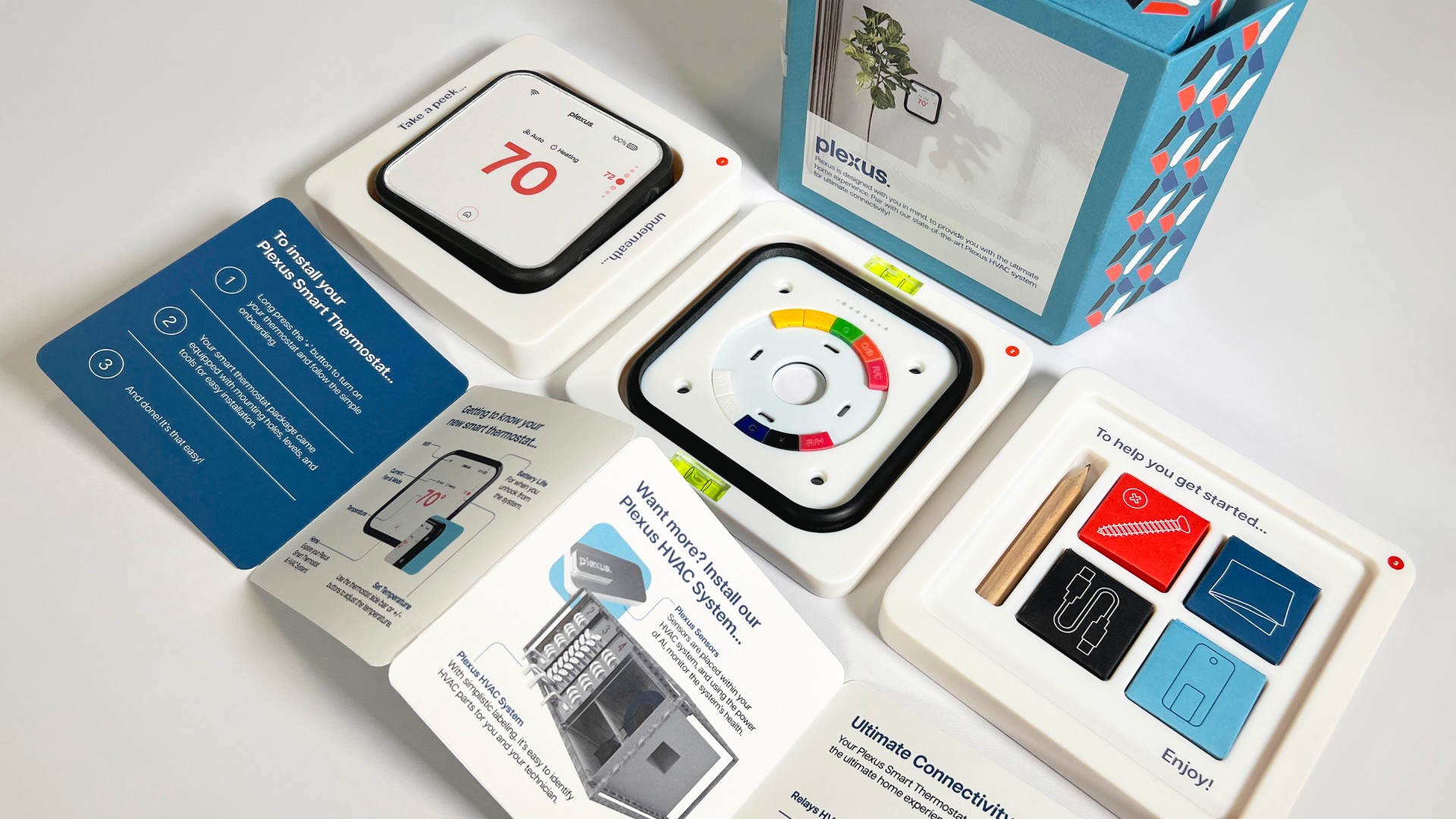
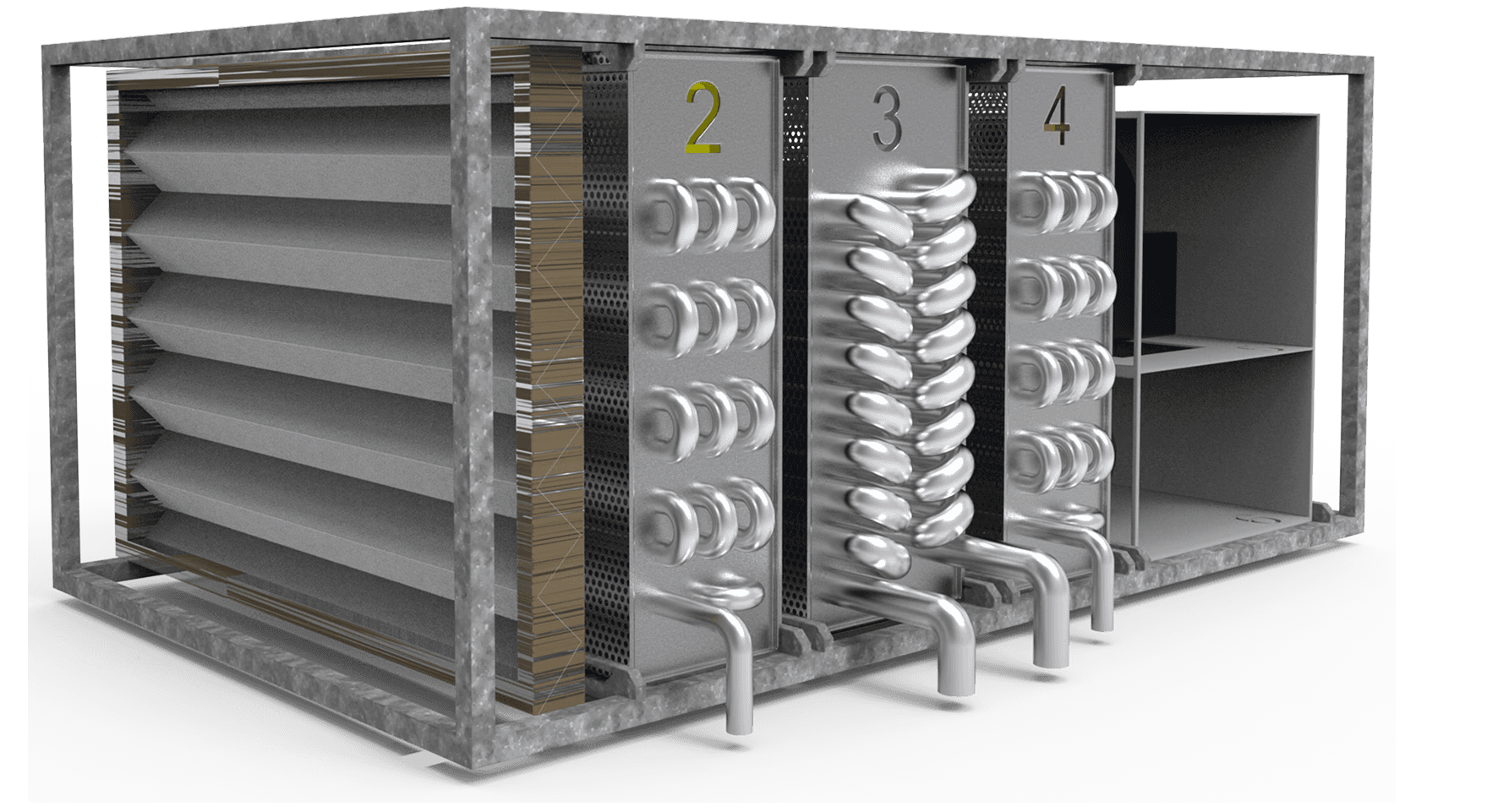
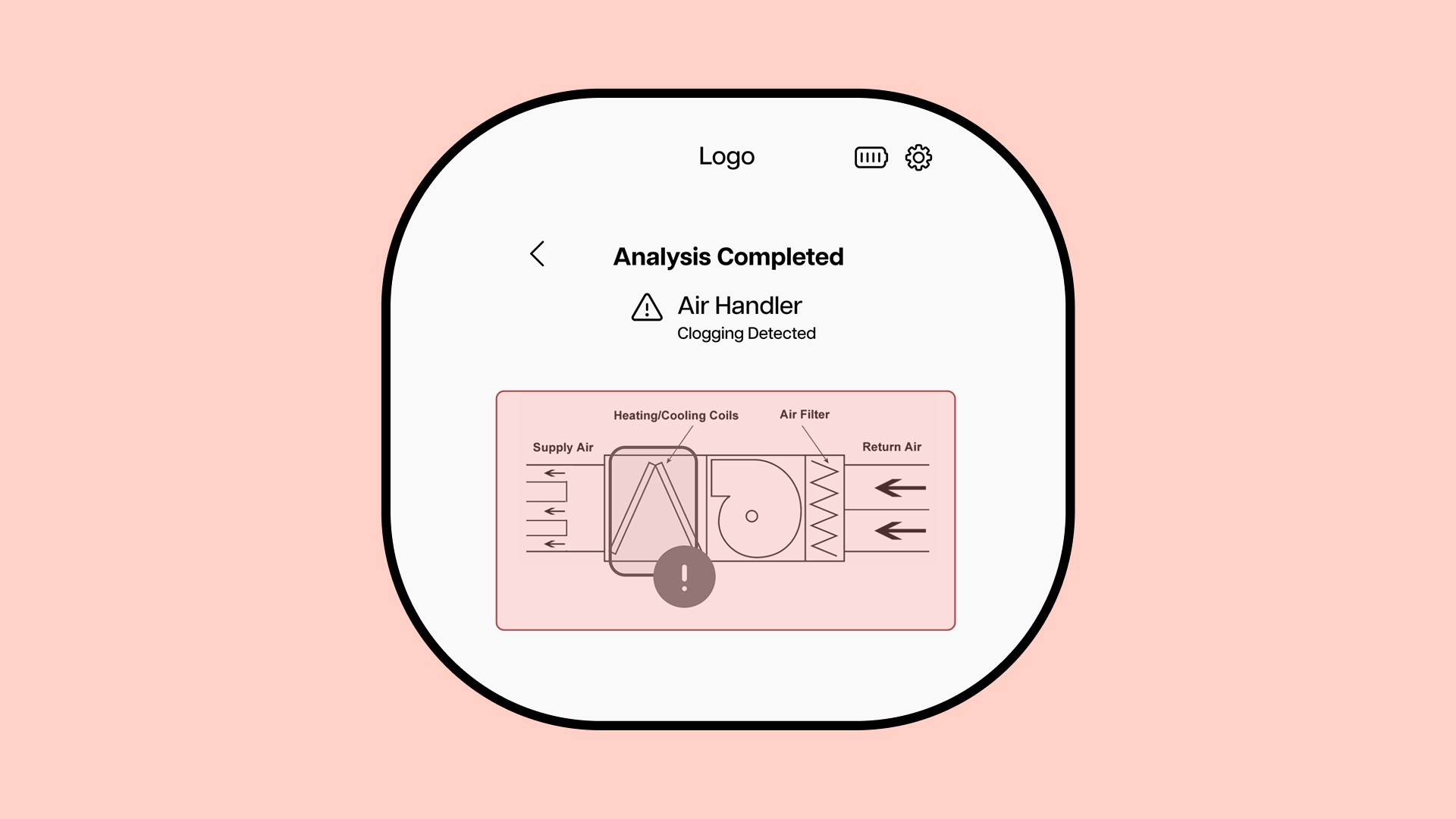
Simplistic labeling makes it easy to identify parts for you and your technician.
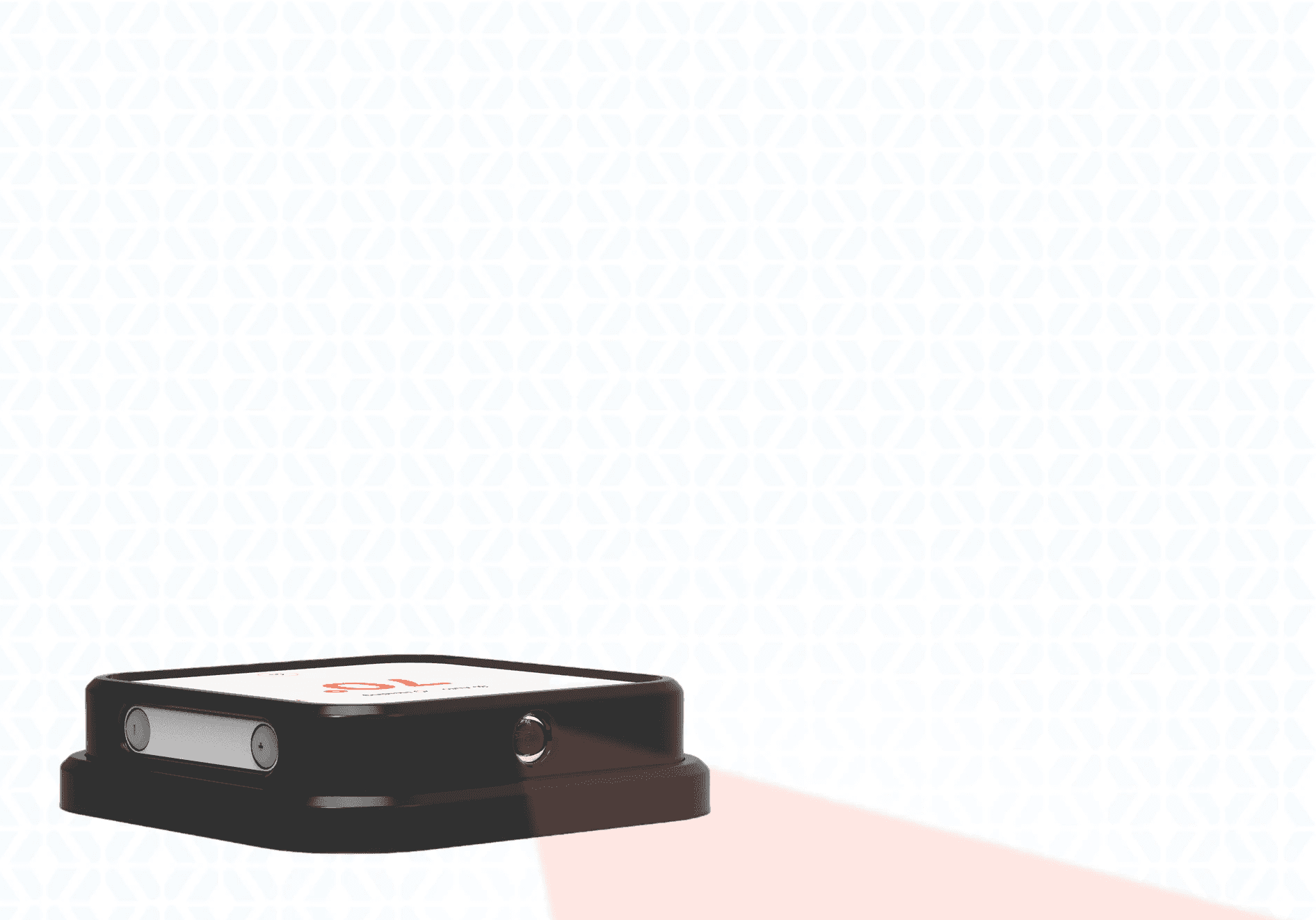
Get real-time alerts about your HVAC system's health
Using artificial intelligence models, your smart thermostat generates HVAC health reports and alerts you if your system is in need of repair.

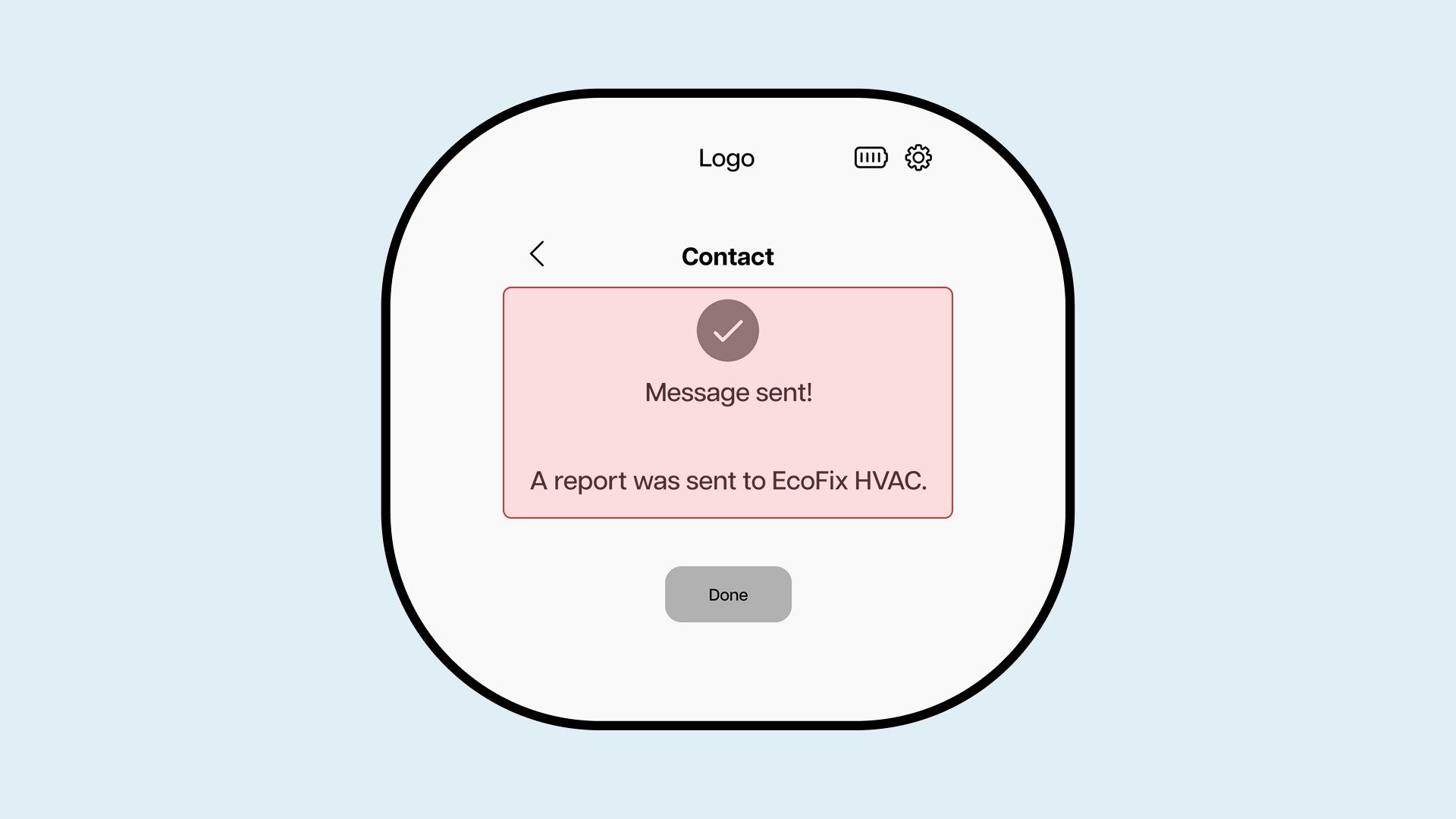
Contact a technician without the hassle
Get connected to a trusted technician, ensuring your home is comfortable with minimal effort.
Research
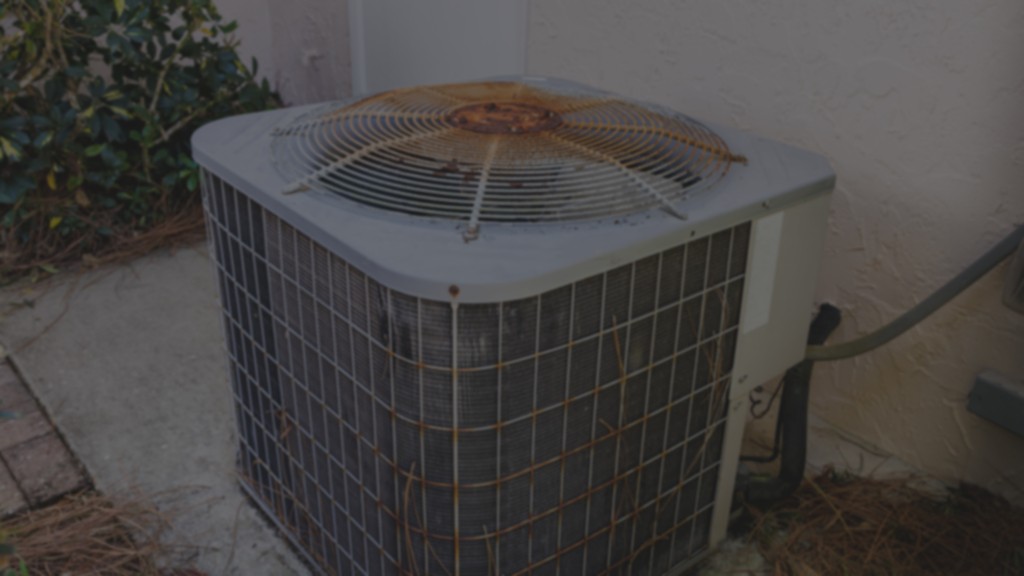
HVAC maintenance can lead to expensive repairs
Source: Service Business Evolution
Interviews
Service callbacks result in financial loss for homeowner and technician
From interviewing with 8 homeowners, they shared their experiences with HVAC repairs and frustrations they have.
Additionally, talking to 2 technicians/engineers led us to learn that oftentimes the problem is not fully diagnosed, and technicians arrive without the needed materials.
“I feel unsafe performing some repairs and still want expert help.”
“An HVAC labeling system would be useful and help cut repair time down.”


“I want my system to self-diagnose problems.”
"Callbacks due to not having proper parts to fix an issue can cause financial loss."

Journey Map
The dysfunctional relationship between homeowners and their old HVAC…
From our interviews, we created a journey map of what the current experience of HVAC maintenance looks like.

HVAC system is not performing properly…
Tries to determine the issue but is confused.
Doesn’t know explicitly what the issue is.

Decides to call a tech…
Searches the web for techs, hoping it works out.
Doesn’t know who to call or price points.

Contacts a tech…
Calls and schedules an appointment, confused but happy there's progress.
Still doesn’t know who to call or price points.

Tech arrives…
Tech ends up not having the part, homeowner is annoyed and defeated.
Both homeowner and tech lose time and money.

Tech has to visit again
HVAC gets repaired and the new part is installed, happy to be done.
Homeowner had to wait longer and reschedule.
How Might We
Our Idea
Connectivity
Development
Shaping the overall experience
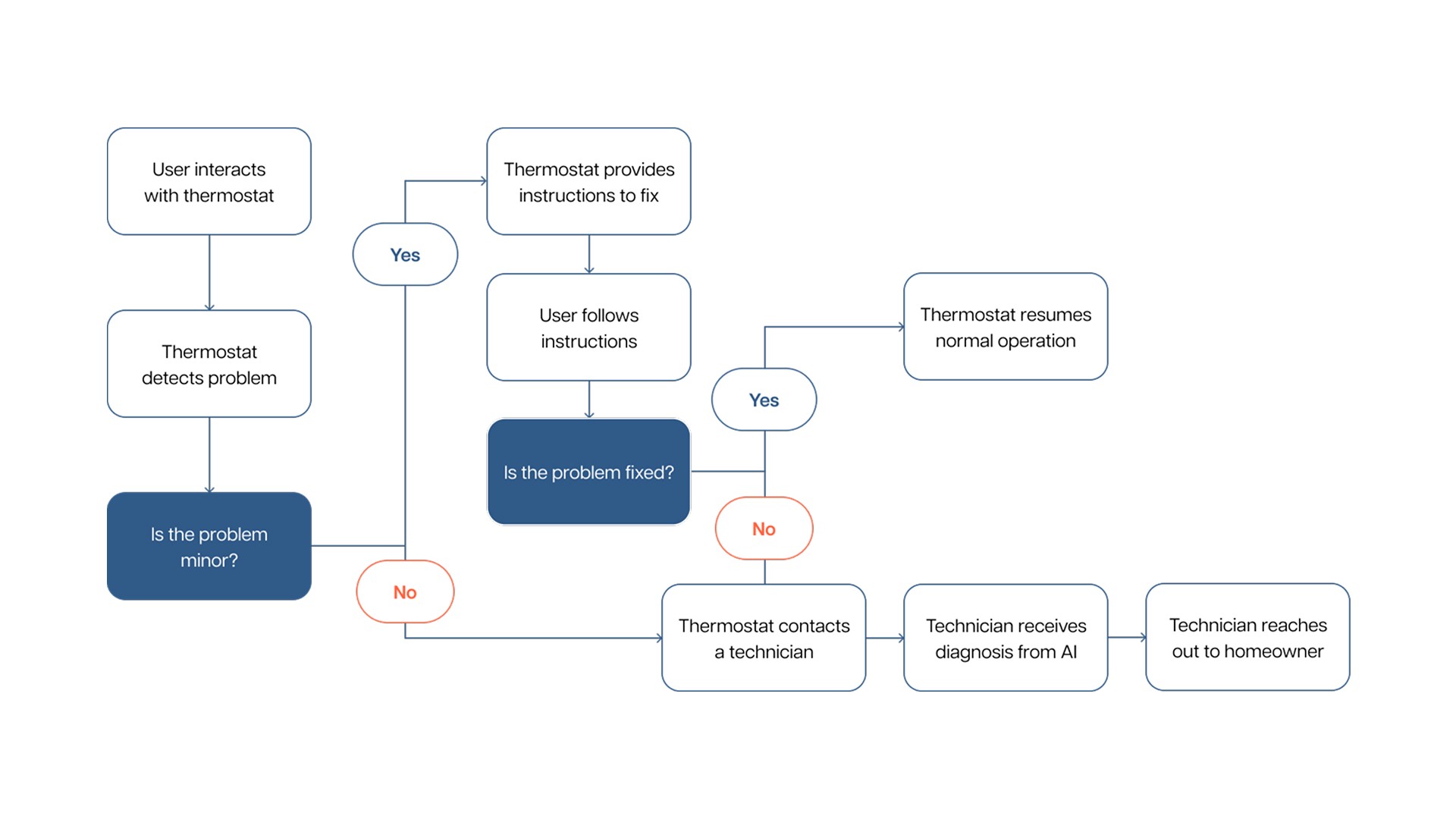
Making a user flow chart helped us to visualize the format of our thermostat interface, highlighting key interactions and touchpoints within the sequence to prioritize simple navigation and usability.
Designing the Plexus Thermostat
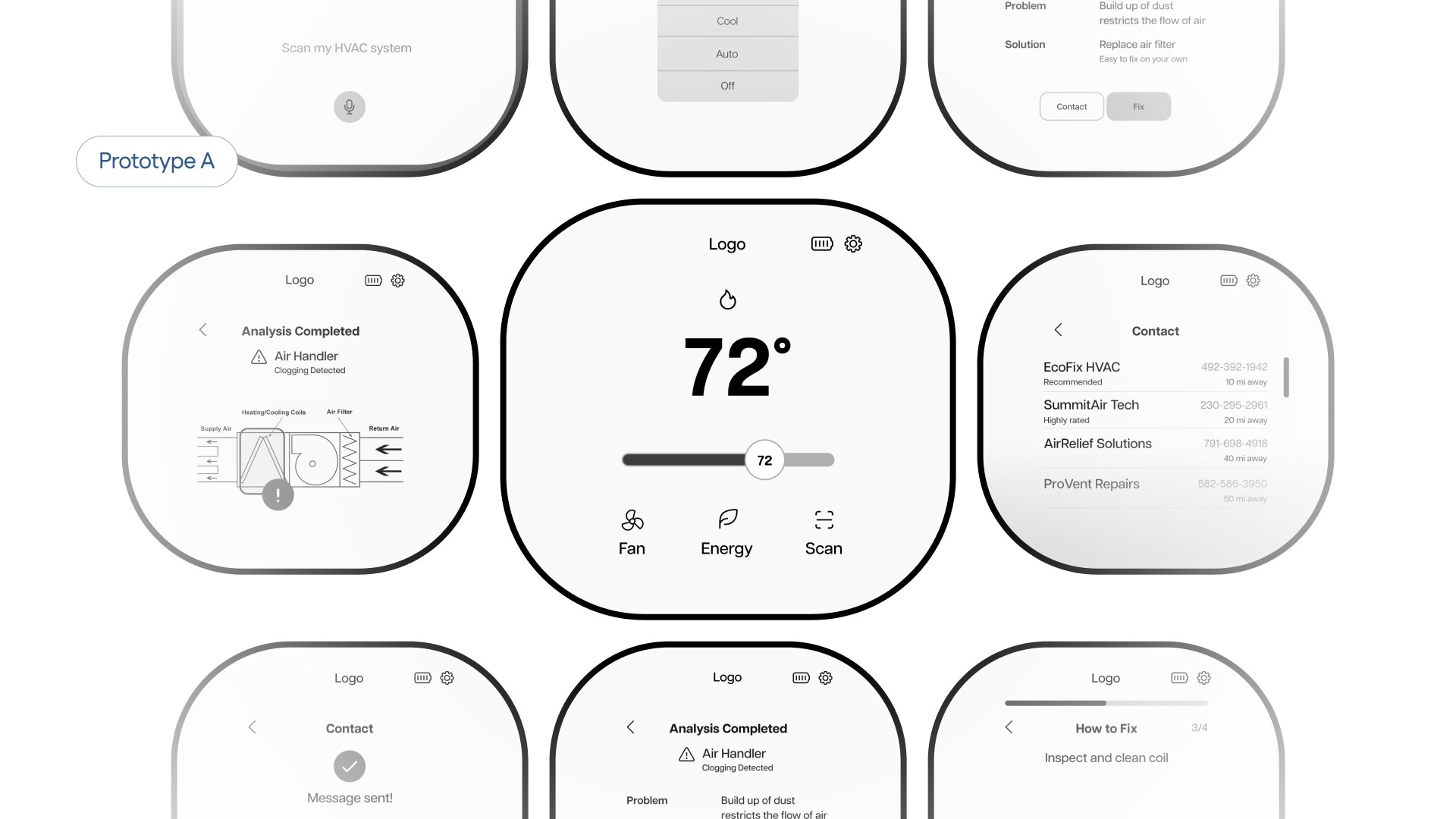
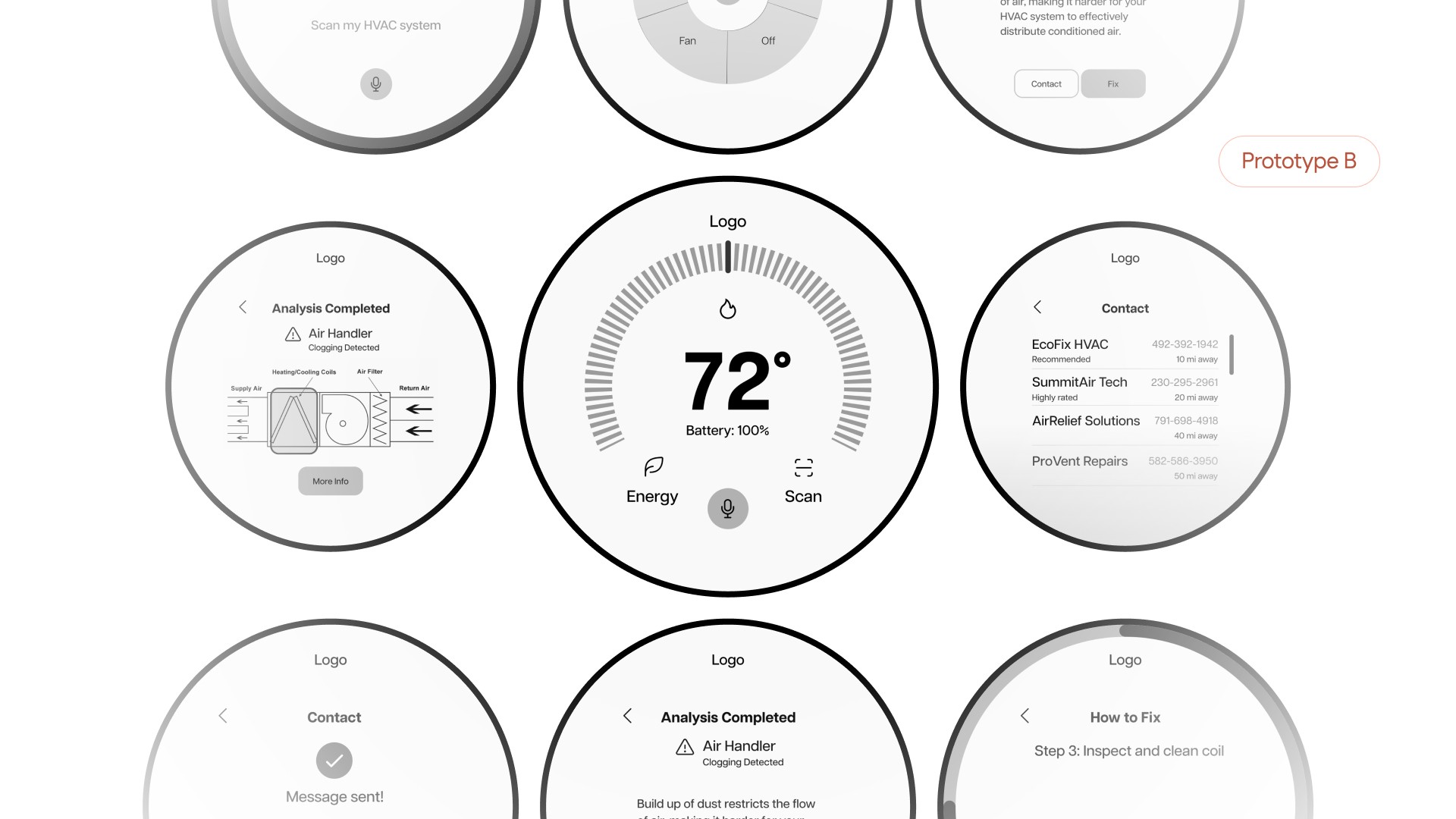
I designed two different prototypes for testing purposes, with different, shape language, layout, and interactions. Taking this approach, I explored the different ways a homeowner could interact in each flow.
User Testing
Getting feedback from homeowners
Testing with 11 homeowners in three rounds revealed which prototype they preferred, how they organized items, and current usability issues that we could look to improve.
A/B Testing
71% of homeowners preferred Prototype A because of its shape language and sturdiness.
Usability Testing
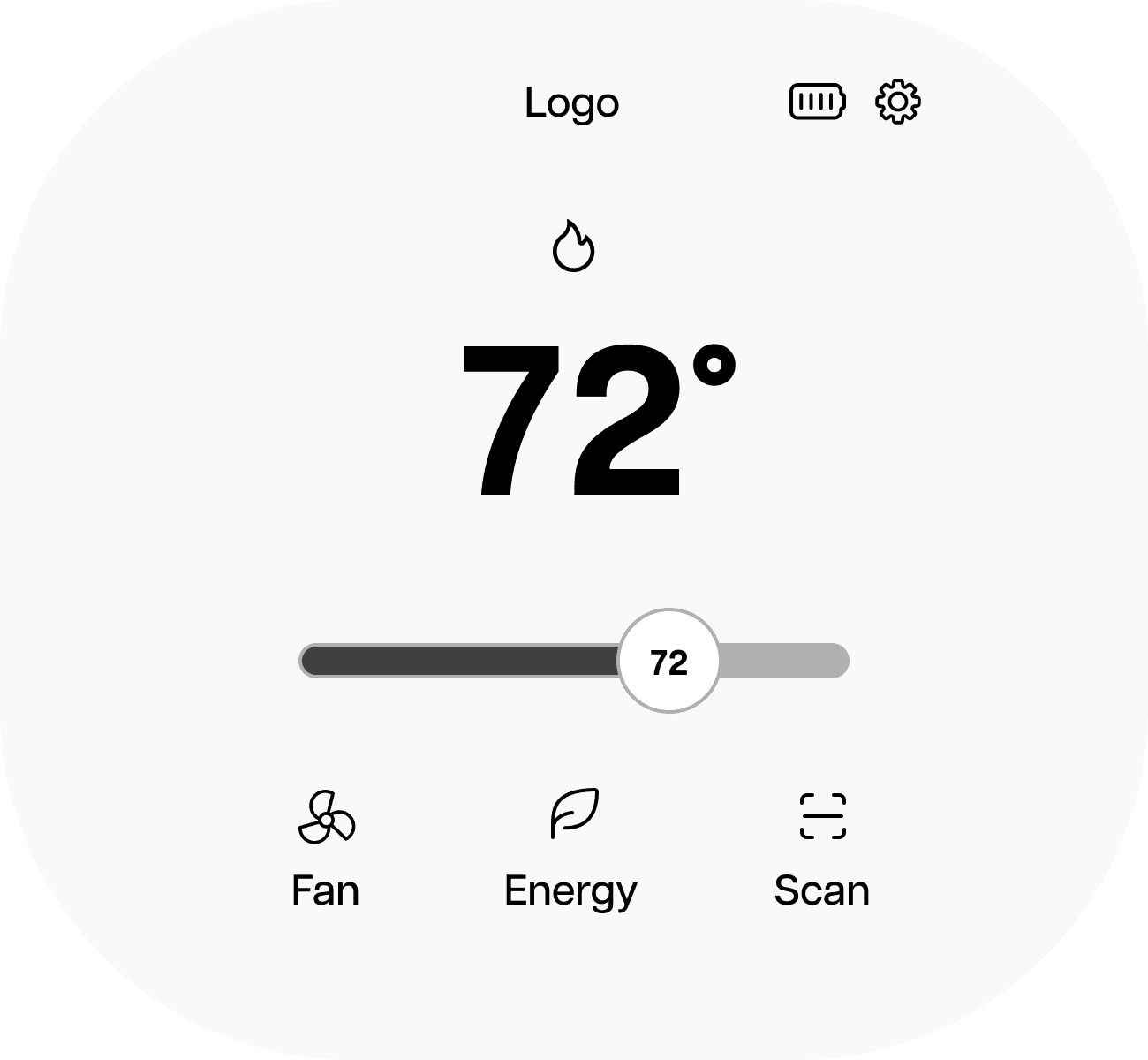
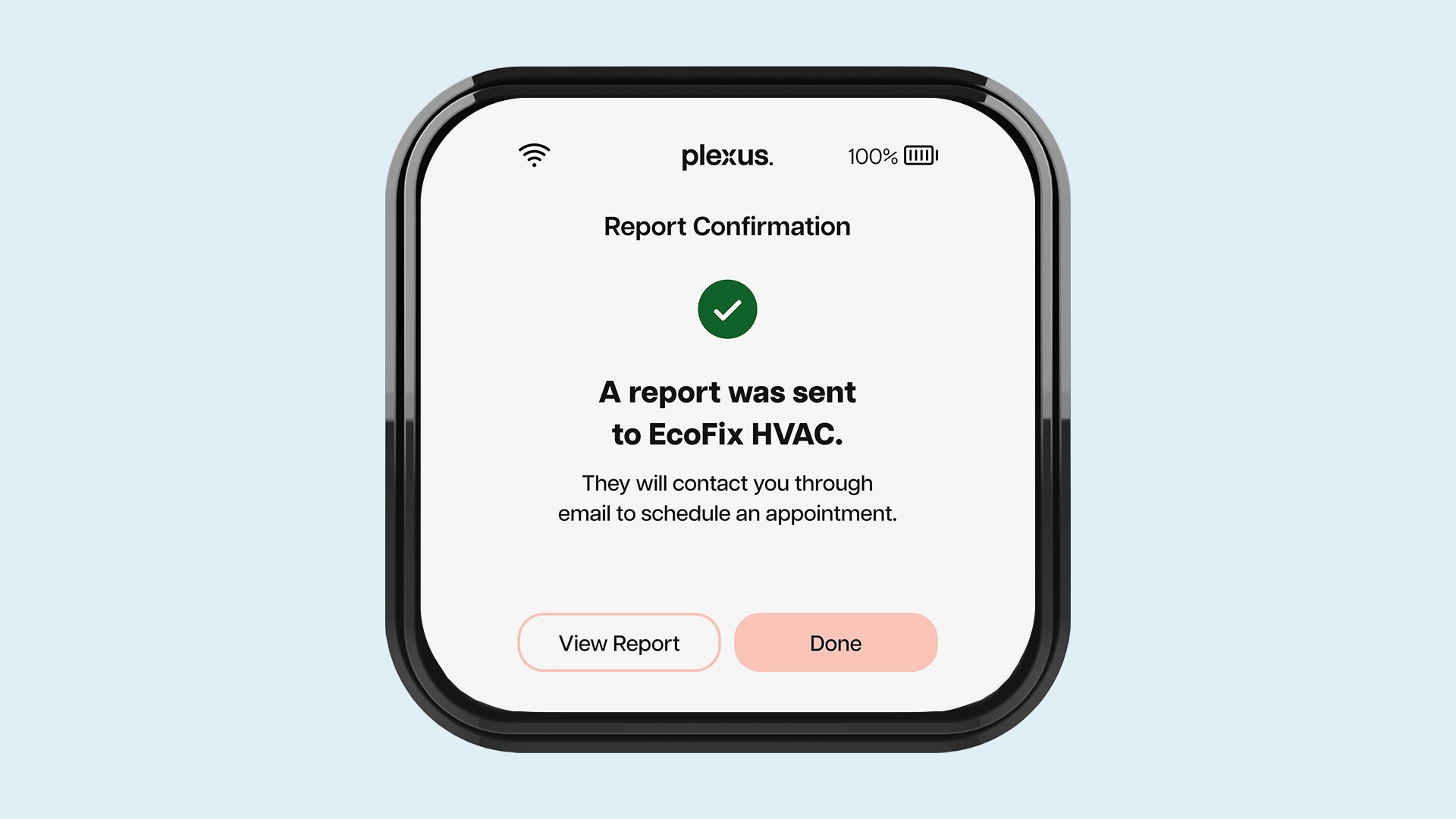
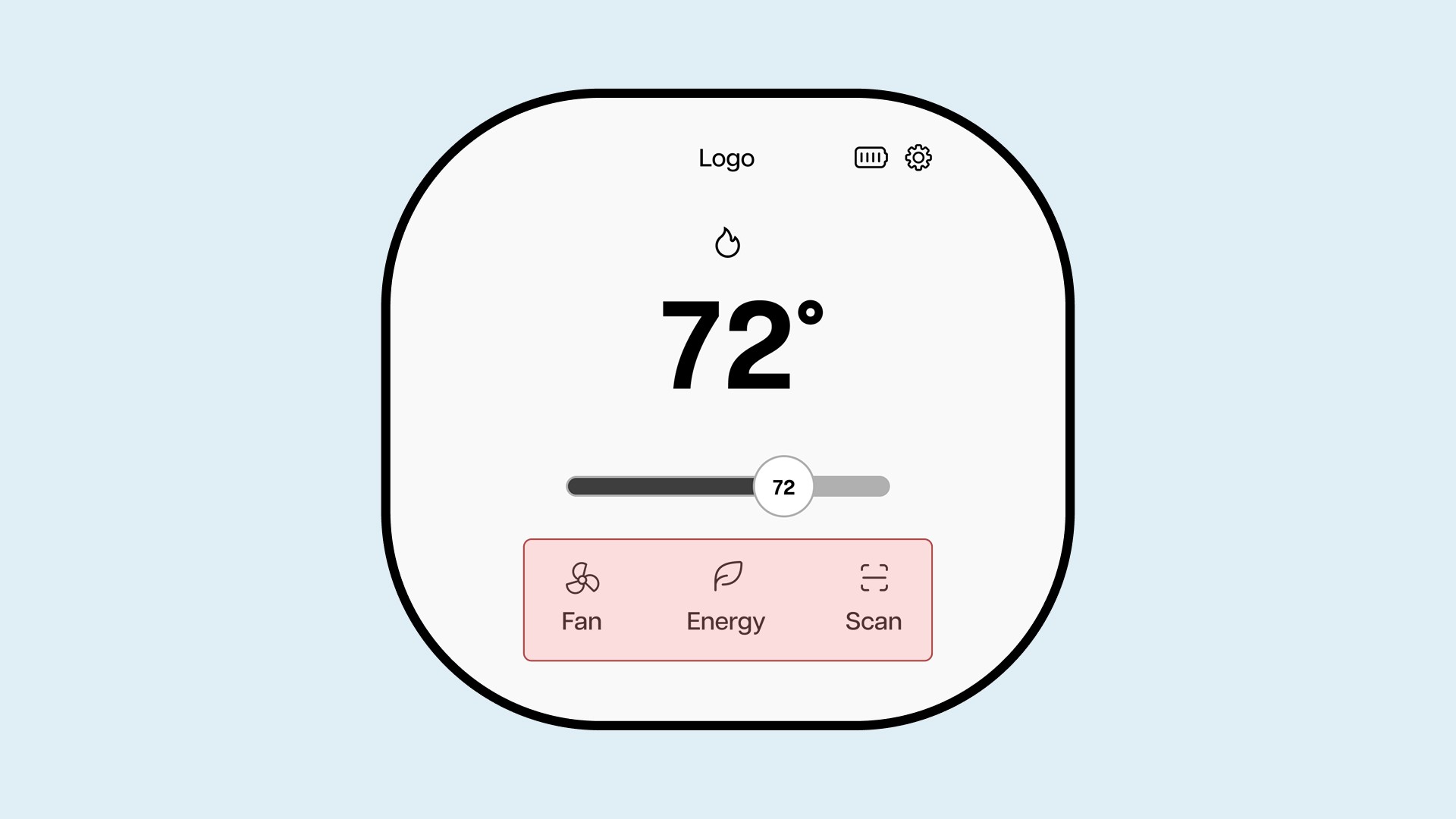
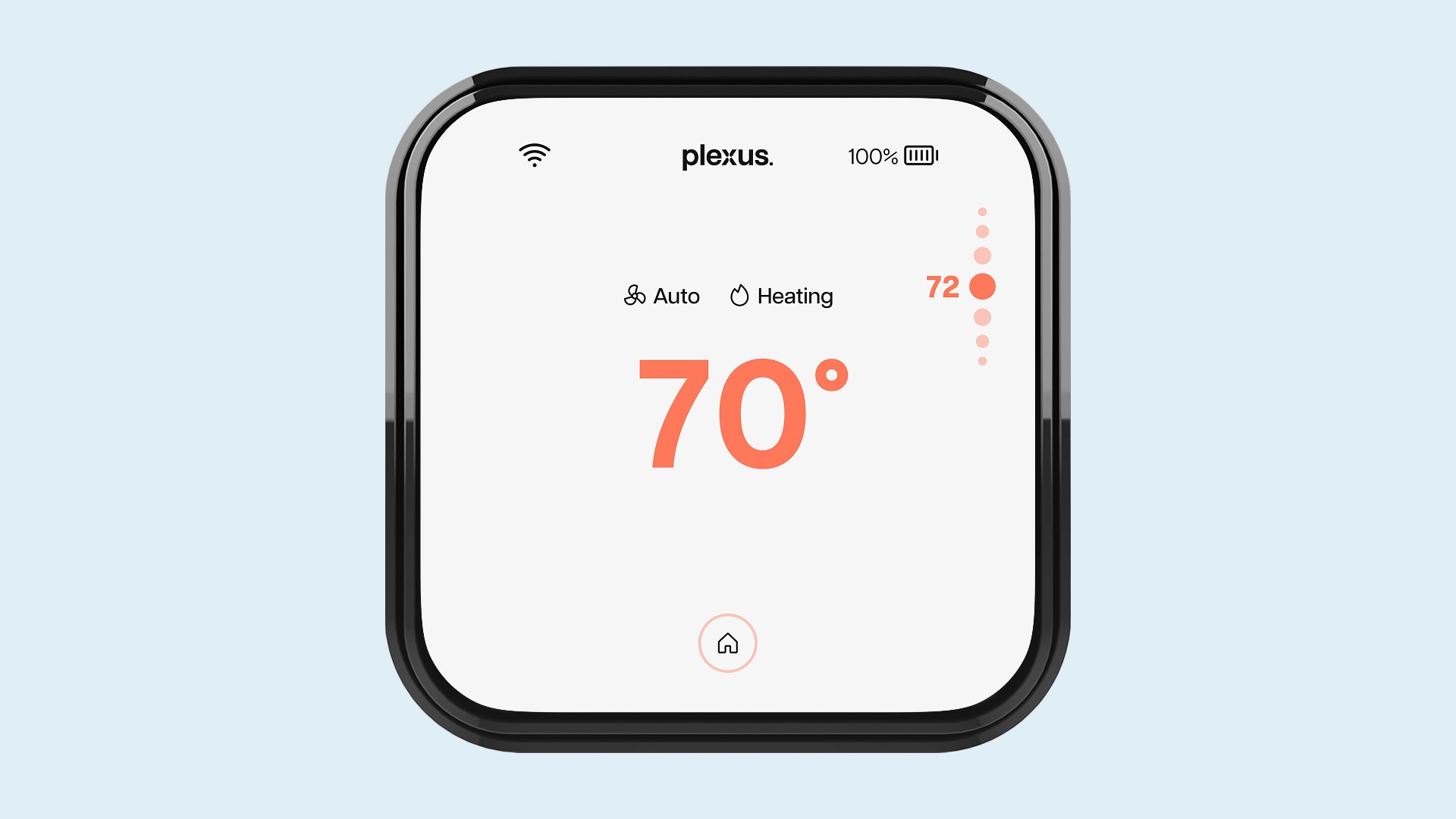
We adjusted text and button sizes to ensure accessibility and readability from a distance.
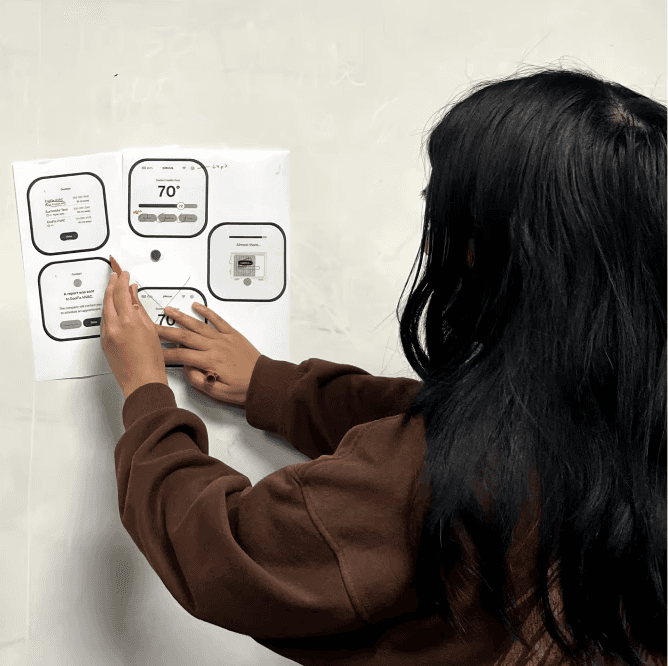
Card Sorting
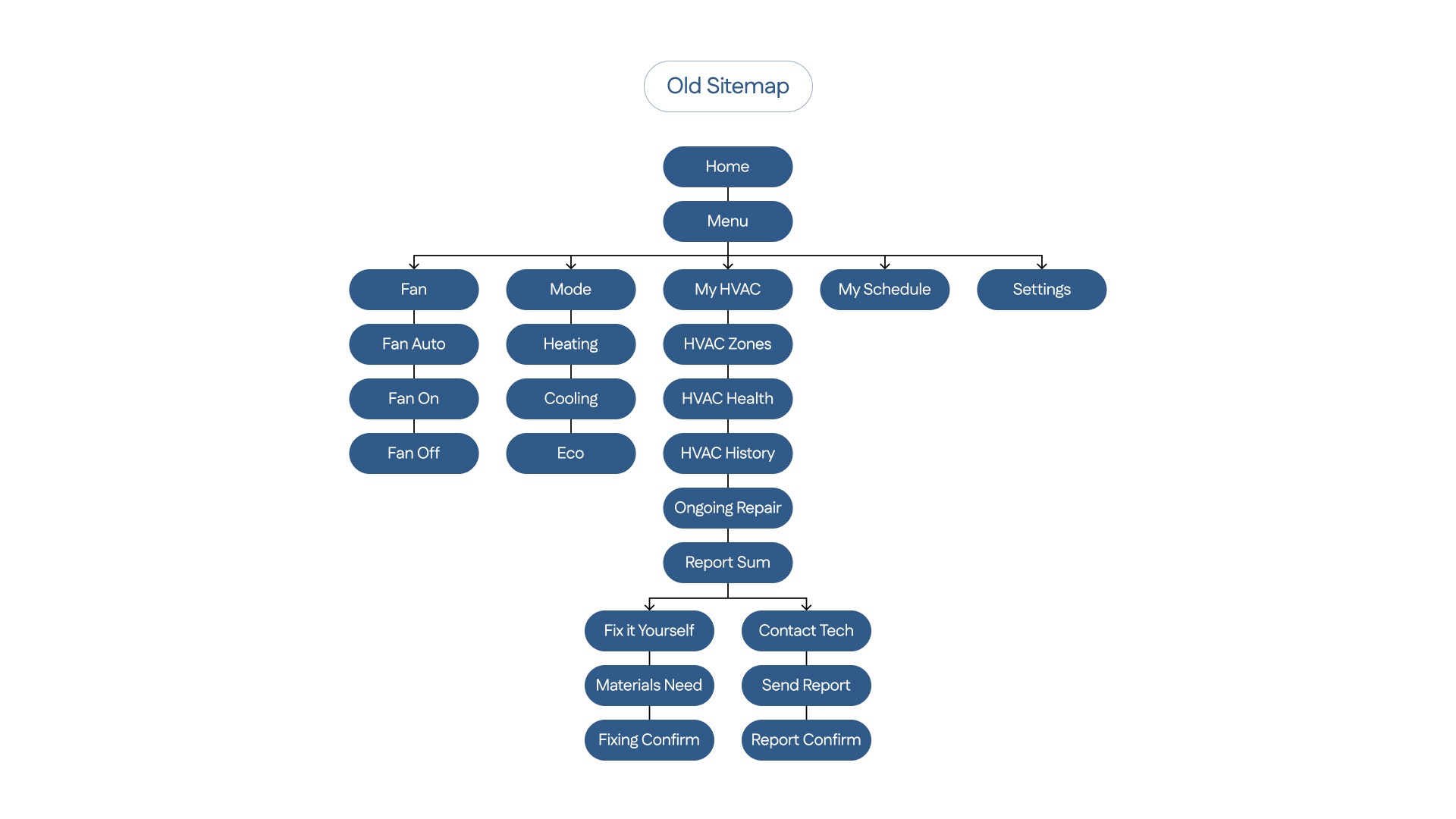
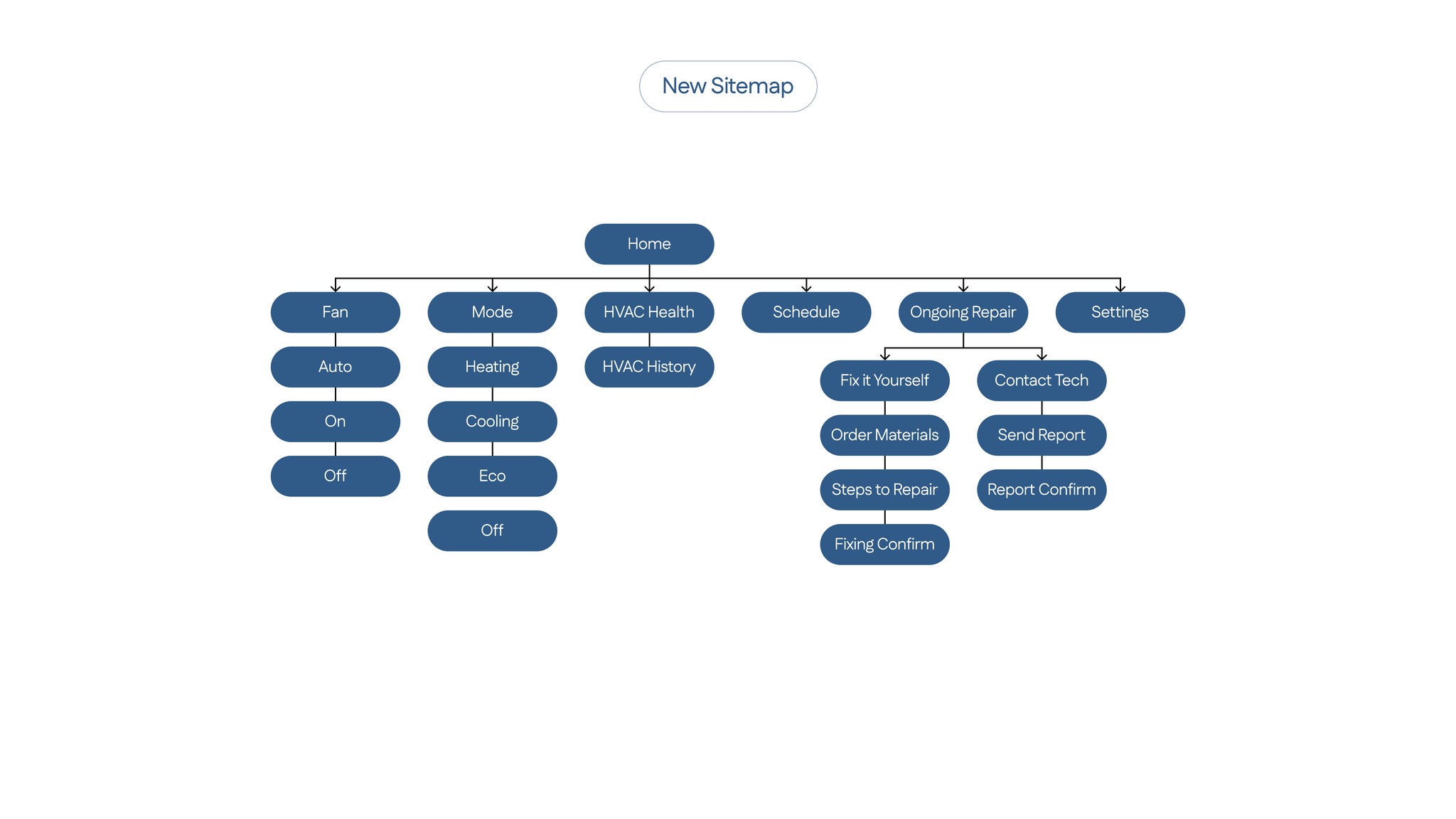
We reworked our sitemap based on our insights, reducing friction and improving navigation throughout the thermostat interface.
Before
After
Before
After
Before
After
Before
After
Before
After
Plexus Design System
Typography
Iconography
FF785A
305A88
85BBD8
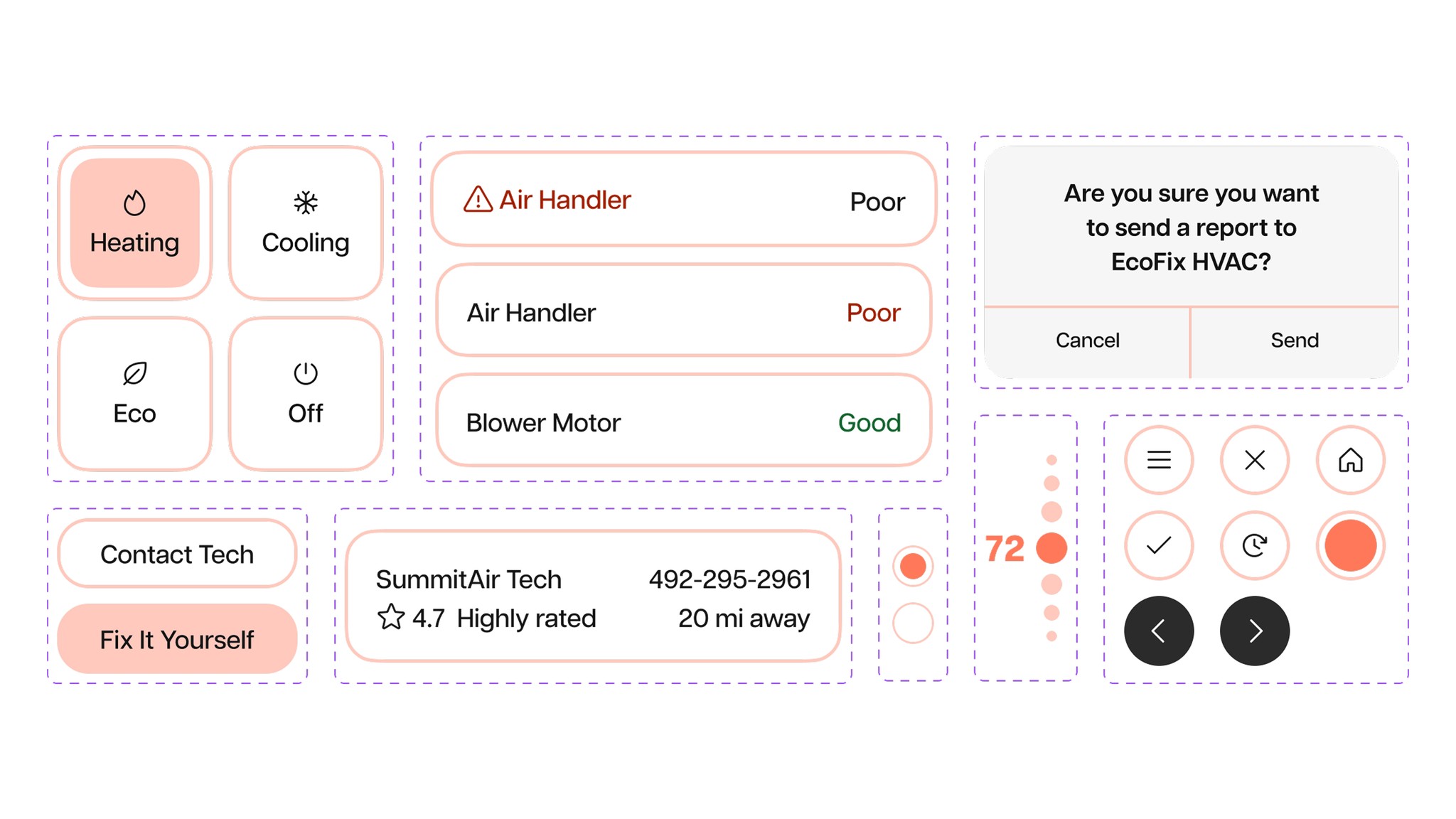
Components
Reflection
Key Learnings
Storytelling simplifies complex ideas
At first, we found it hard to engage our audience with our concept as HVAC systems can be complex. Through storytelling, we were able to break down our ideas into understandable scenarios, helping them to relate on a personal level.
It's more than a screen, it's the context
Designing a thermostat interface challenged me to think beyond traditional screens. I had to pay attention to text and button sizes and think about how someone would interact with the product, whether from a distance or up close.


Other Projects